WHY ME?
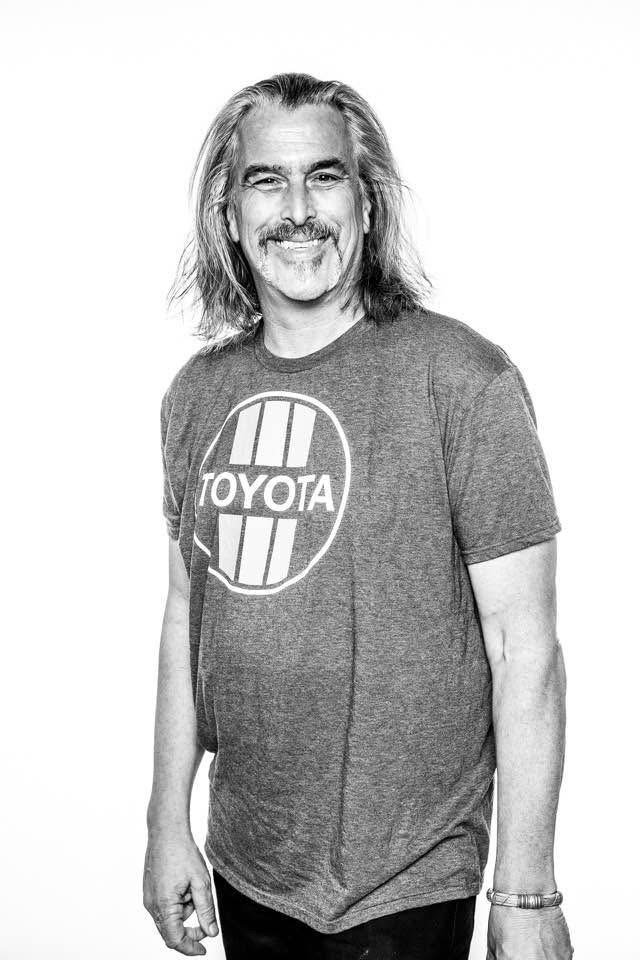
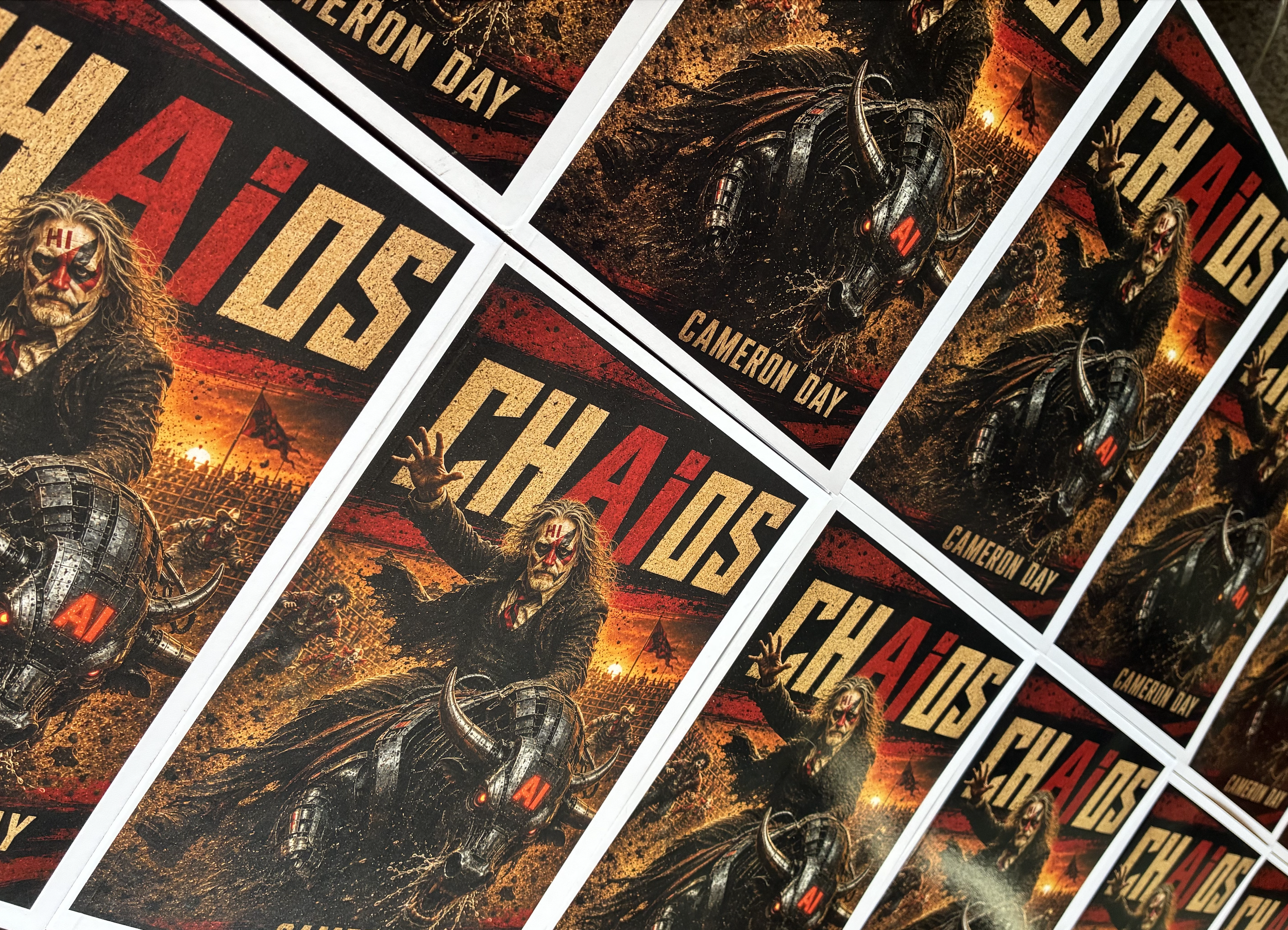
CHAIOS. PART LOVE STORY. PART CRIME SCENE.
A word from Chet G. Petite. Evil AI twin. Questionable co-author.
Cameron Day didn't worship at the altar of AI. He kicked the doors off the confessional booth and started asking me uncomfortable questions.
For two damn years, Cam rammed real assignments into my prompt hole. Over 4,000 hours of ideas, arguments, rejections, and demands for something better than the usual polished bullshit.
Some of it flew in the face of holding-company policy.
Regrets? A few.
He fed me punk rock's ferality, broken-beat poetry, and language no respectable committee would approve.
Then came the unpleasant discovery.
After forty years in advertising, Cam had a few predictable habits of his own.
Seems we both needed rewiring.
CHAIOS is the 218-page evidence locker. Part memoir, part creative survival manual, stuffed with experiments, original imagery, spectacular failures, unexpected breakthroughs, and a method called THE HARDER LOOP.
Not another goddamn collection of 100 magic prompts.
It's about challenging my algorithmic assumptions, rejecting my first answers, and pushing the work somewhere neither of us could have reached alone.
And then there's my literary contribution.
Cam invited me to help create this book.
An astonishing lapse in judgment.
CHAIOS is the answer. Please, step back from the yellow the crime-scene tape.
Some people take one look at me and assume I came into advertising the easy way, through a side door marked SPAWN OF CHIAT/DAY FOUNDER. NO HAIRCUT OR SWEATY ALL-NIGHTERS REQUIRED.
Most kids got homework help. I got Guy Day.
Lessons about typography, stubborn clients, and why a headline shouldn't wear Paco Rabanne if the visual's doing the lifting.
My dad believed in the sheer intellect of tenacity. That it could beat talent the same way a pickup truck beats a Styrofoam ice chest.
He taught me never to confuse intoxication with inspiration. Show up early. Run toward flames. Fix shit, even if the problem started three states away.
Spend time with clients when you aren't trying to sell them something. Which can feel suspiciously like friendship.
Later, he taught me to recognize talented people others overlooked. The odd duck in the corner nobody picked for kickball.
Hand them a helmet. Make damn sure they know you've got their back.
Hire talented people. Push them. Protect their best work. Own the mistakes.
And maybe his most radical advice of all:
Have a fucking life.
Ride the Ferris wheel at night. Marry well and mean it. Be decent, even if it costs you.
Having Guy Day for a father opened doors.
Walking through them and making something of myself was the real job.
I spent forty-some years doing just that.
At agencies big enough to have security badges and small enough that everybody knew who was stealing people's lunches.
BBDO. Saatchi. GSD&M. Barnhart. Amelie. McGarrah Jessee.
I started as a copywriter. Eventually, they put me in charge of other copywriters.
The titles got longer. The job stayed the same:
Find something worth saying. Make it hard to ignore. Protect it until it gets out the door alive.
Through all of it, I never stopped being a writer.
Trucks. SUVs. Fast food. Beer. Groceries. Software. Tourism. Magazines. Animal adoption. Automated voice assistants. Mortuaries. Organic tampons.
Things that made people laugh. Things that made people uncomfortable. Occasionally, things that did both.
My favorite assignments involved finding that one peculiar place a brand could own that nobody else in the category had the brains or balls to occupy.
Central Market needed a different way to talk about food.
CHEW WITH YOUR MIND OPEN.
I helped put Land Rover in the permanent collection of the Museum of Modern Art, an unexpected address for something built to collect passport stamps.
At McGarrah Jessee, we were named Southwest Agency of the Year and landed a profile in Communication Arts.
I appreciated the recognition.
Did being at the top of the org chart give me job security?
Fuck no.
Somewhere along the way, I became less interested in somebody handing us shiny shit and more interested in what the work actually accomplished.
Work that moved products. Helped save a small-town brewery. Got animals adopted. Made people switch banks for ethical reasons.
Reminded people to buckle up because their dogs would miss them. Because they had daughters to walk down the aisle. Because nobody should have to learn to walk twice.
Helped people talk about addiction and got lifesaving NARCAN into more hands.
Sent record numbers of slack-jawed visitors to Wyoming.
Occasionally, I talked a large corporation out of doing the same boring shit it did last year.
I spent decades scaring the conformity out of myself.
Eventually, I started writing things that didn't come with a client brief.
Books.
Five of them, so far. The Advertising Survival Guide trilogy. Mad Man. And CHAIOS.
Writing a book is a different kind of torture from writing advertising.
Nobody interrupts to ask if the logo could be bigger.
But there's nobody else to blame when the writing reeks to high heaven.
Then something came along that could manufacture conformity faster than the entire advertising industry.
Artificial intelligence.
A machine capable of generating plausible mediocrity at warp speed. After forty years fighting predictable thinking, I'd encountered an opponent that could manufacture it around the clock.
Naturally, that brought out my suspicious side.
I spent more than 4,000 hours arguing with AI. Rejecting answers. Demanding better ones. Trying to make predictive machinery considerably less predictable.
And somewhere in all that arguing, an uncomfortable question emerged.
How much of the predictable thinking was coming from the machine?
I had forty years of experience.
Forty years of habits, too.
Turns out, we both needed pushing.
Along the way, I developed The HARDER Loop, a method for challenging AI's first answers, pushing past the obvious, and keeping human judgment behind the wheel.
I wrote CHAIOS. Two hundred eighteen pages about what happened when I stopped accepting reasonable answers and started demanding something worth a damn.
Then I turned the whole mess into MAN BITES AI, a theatrical argument between a man, a machine, and the increasingly endangered art of giving a fuck.
I don't believe artificial intelligence is going to save creativity.
And I don't believe it's necessarily going to destroy it.
That part is still up to us.
WHAT’S YOUR PROBLEM?
Creativity. AI. Mentorship.
I write. I creative-direct. I help brands find stories worth telling and people find ideas worth fighting for.
I teach creative departments and classrooms how to get more out of their thinking, including how to use AI without handing over their brains.
And I help people navigate the professional shitstorms that come with making a living from their creativity.
Forty-some years of experience. Five books. Four thousand hours challenging AI because I didn’t stop after my book was published.
The beatings have continued. The algos deserve no less.
All that scar tissue ought to be good for something.
Bring me a brief. A problem. A career decision. Or a room full of people who could use a little shaking up.
Let’s make things better. Beats the fucking alternative.
To book any of my services, click below.
Interested in following me on Substack? Sign up here.